Career intelligence
Top 10 Jobs Without a College Degree
Compare ten careers with recognized nondegree entry routes, including pay, training, working conditions, and practical first steps.

Pay and Training for Ten Practical Career Paths
A rewarding career can begin with an apprenticeship, a focused certificate program, or an employer willing to invest in someone who can learn the work. Electrical systems need qualified technicians. Patients need capable caregivers. Manufacturers need people who can keep equipment running. Businesses need sales professionals who understand their customers.
For someone without a college degree, the challenge is deciding which opportunity deserves the investment of time and effort. An attractive salary is only part of that decision. Training requirements, local hiring, working conditions, and the ability to earn while learning all affect whether a career is a realistic fit.
The ten careers below offer established entry routes without an associate's or bachelor's degree. Several require substantial training, and some require a professional license. They provide a useful starting point for people entering the workforce, changing occupations, or building on practical experience.
How these careers were selected
This is an editorial ranking based on earnings, demand, training pathways, and the range of employment opportunities. Each occupation has a recognized nondegree entry route. The list includes skilled trades, healthcare, transportation, and business sales so readers can compare different kinds of work.
Pay figures are national median annual wages for May 2025, published by the U.S. Bureau of Labor Statistics. A median is the midpoint: half of workers earn more and half earn less. These figures cover workers at different experience levels. New entrants and apprentices may earn substantially less, and compensation varies by location and employer.
Projected annual openings are averages for 2025 through 2035. They include opportunities created when workers retire or move into other occupations, along with employment growth. They should be read as long-term indicators rather than a count of today's advertised vacancies.
The careers at a glance
1. Electrician Median annual pay: $63,190 Projected annual openings: 72,700
2. Industrial machinery mechanic Median annual pay: $64,520 Projected annual openings: 44,400
3. HVAC and refrigeration technician Median annual pay: $61,010 Projected annual openings: 40,600
4. Plumber, pipefitter, or steamfitter Median annual pay: $63,800 Projected annual openings: 42,000
5. Licensed practical or vocational nurse Median annual pay: $64,400 Projected annual openings: 51,800
6. Aircraft mechanic and service technician Median annual pay: $79,870 Projected annual openings: 11,400
7. Electrical power-line installer and repairer Median annual pay: $95,320 Projected annual openings: 10,900
8. Nontechnical wholesale or manufacturing sales representative Median annual pay: $72,080 Projected annual openings: 99,800
9. Heavy or tractor-trailer truck driver Median annual pay: $58,640 Projected annual openings: 214,500
10. Elevator and escalator installer and repairer Median annual pay: $109,910 Projected annual openings: 1,900
Source: BLS occupational projections and worker characteristics [1]. The industrial machinery, aircraft mechanic, and sales figures refer to the specific occupations named, rather than broader categories that include related jobs.
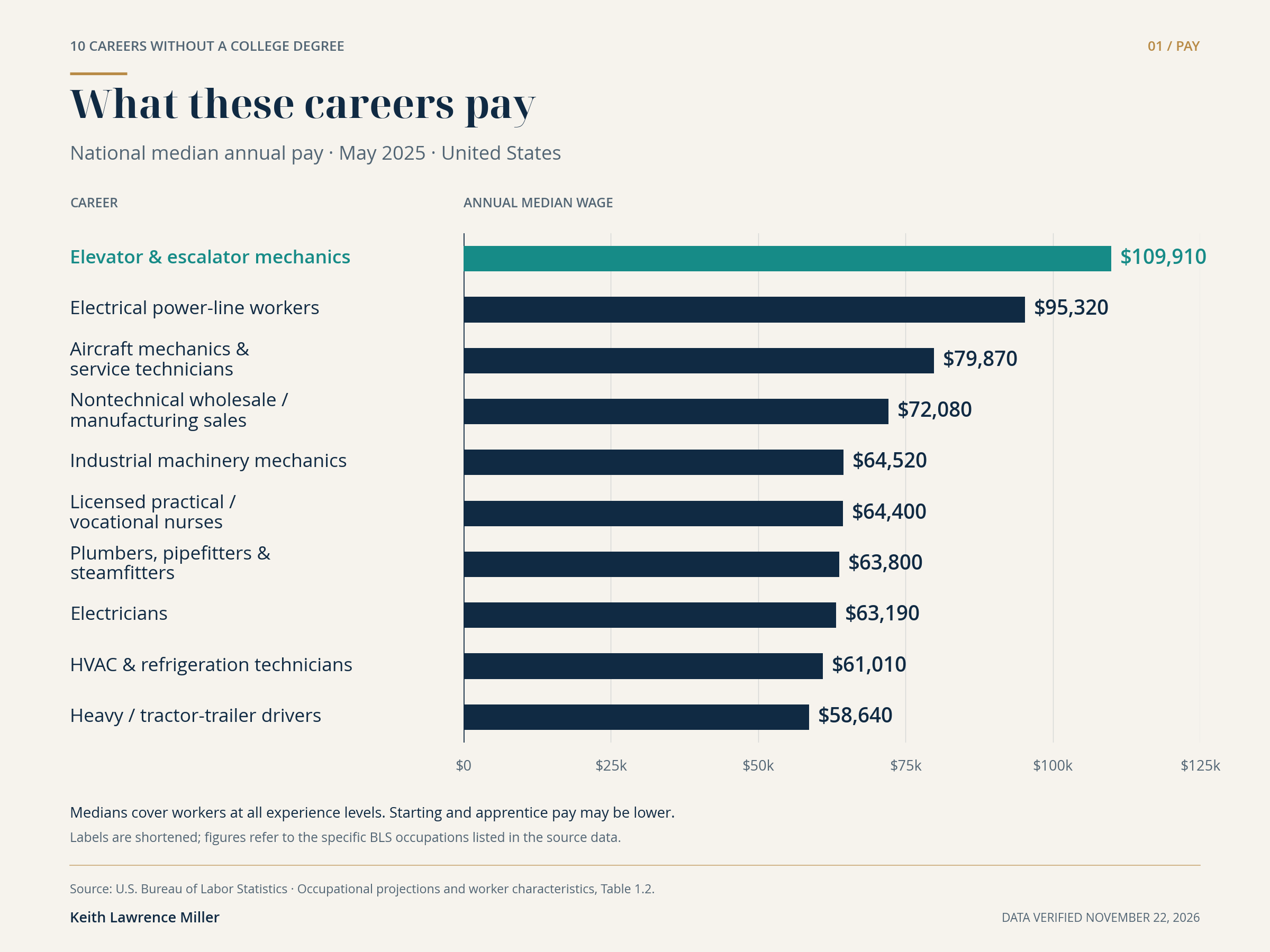
A comparison of May 2025 national median annual wages for the ten careers in the article.
1 Electrician
Electricians install, maintain, and repair electrical systems in homes, businesses, and industrial facilities. The work combines technical knowledge with practical troubleshooting: reading plans, identifying faults, making repairs, and checking that installations meet applicable standards.
Most electricians learn through a four- or five-year apprenticeship that includes paid workplace training and technical instruction. Most states require licensing. Apprentices earn while developing their skills, although their pay begins below that of fully trained electricians.
Electrician ranks first here because it combines a substantial number of projected openings with a defined training route and several types of employers. The work can involve ladders, confined spaces, physical exertion, and irregular hours. It may suit someone who likes solving concrete problems and can follow detailed safety procedures. BLS electrician profile [2].
Where to begin: Identify local apprenticeship sponsors and electrical contractors. Ask about application dates, entry requirements, starting wages, and how technical instruction fits around the work schedule.

Practical training connects technical knowledge with the work an employer needs done.
2 Industrial Machinery Mechanic
Industrial machinery mechanics maintain and repair the equipment that factories and other industrial operations depend on. A typical assignment may involve finding the cause of a malfunction, replacing a worn component, aligning machinery, and testing whether a repair solved the problem.
A high school diploma followed by substantial workplace training can provide an entry route. Training commonly lasts a year or longer. The occupation is particularly attractive for people who enjoy mechanical systems, troubleshooting, and work that rewards careful observation.
BLS projects 17.8 percent employment growth for this specific occupation from 2025 to 2035. That gives it the strongest projected growth among the ten careers on this list. Night shifts, weekend assignments, and on-call responsibilities may be part of the job, particularly when production equipment needs urgent attention. BLS industrial machinery profile [3] and detailed projections [1].
Where to begin: Review maintenance trainee and industrial mechanic openings near you. Compare the skills employers request and ask which entry positions include structured training.
3 HVAC and Refrigeration Technician
Heating, ventilation, air conditioning, and refrigeration technicians install and service systems that control temperature and preserve refrigerated products. Their workplaces include homes, schools, hospitals, and commercial buildings.
Certificate programs provide a route into the occupation without a college degree. Employers also provide workplace training, and licensing or certification may apply depending on the work and location. Some people enter with less formal education and learn through employment.
This career may appeal to someone who likes diagnosing problems, working with tools, and explaining repairs to customers. It also requires tolerance for uncomfortable conditions. Technicians may work in cramped spaces, outdoors, or in extreme temperatures. Seasonal demand and emergency repairs can affect schedules. BLS HVAC profile [4].
Where to begin: Compare local trainee openings with certificate-program requirements. Ask employers which credentials they accept and whether they hire helpers or trainees before formal training is complete.
4 Plumbing and Pipefitting
These occupations share a foundation in piping systems, with different types of work. Plumbers may install fixtures and repair water or drainage systems. Pipefitters and steamfitters often work on industrial systems that carry steam, chemicals, or other materials.
Most learn through a four- or five-year apprenticeship that includes paid workplace training. Most states require plumbers to be licensed, while requirements for other piping specialties vary.
The field offers several environments to explore, including residential service, commercial construction, manufacturing, and power facilities. A person who enjoys solving a homeowner's repair problem may prefer a different specialty from someone drawn to large industrial projects. Physical demands, heavy materials, tight spaces, and emergency calls should all factor into the choice. BLS plumbing and pipefitting profile [5].
Where to begin: Speak with apprenticeship sponsors and contractors about the work their apprentices actually perform. Compare residential service and industrial pathways before deciding which one to pursue.

Patient-care work combines attentive communication with dependable professional practice.
5 Licensed Practical or Vocational Nurse
Licensed practical nurses and licensed vocational nurses provide basic medical care in settings such as nursing facilities, hospitals, physicians' offices, and private homes. Responsibilities can include monitoring patients, assisting with personal care, keeping records, and communicating changes in a patient's condition.
Entry typically requires a state-approved practical nursing certificate or diploma program lasting about one year. Graduates must pass the licensing examination and obtain a state license before practicing. Training includes supervised clinical experience, and the specific scope of practice varies by state.
This is a meaningful option for someone who wants direct patient contact and can combine compassion with close attention to detail. It also involves demanding responsibilities. Patient handling, shifts, and emotionally difficult situations are part of the occupation. Readers should consider whether they want the everyday work of caring for people, as well as the career opportunity. BLS practical and vocational nursing profile [6].
Where to begin: Check your state nursing board's list of approved programs. Confirm the qualification awarded, clinical requirements, and eligibility for licensure before comparing schools.
6 Aircraft Mechanic and Service Technician
Aircraft mechanics inspect, maintain, and repair aircraft. Their work requires careful adherence to procedures, accurate records, and the ability to diagnose mechanical problems. A repair must be completed and documented correctly because the consequences extend well beyond the workshop.
A common route is an FAA-certificated aviation maintenance technician school. Qualifying practical experience, including some military experience, can also provide a pathway toward certification eligibility. Graduates must still complete the FAA's required examinations and meet its other certification requirements. FAA experience requirements [7].
The occupation offers strong median earnings for a technical career with nondegree entry routes. Location and schedule matter: prospective workers should investigate aviation employers within reach and the shifts they require. BLS aircraft maintenance profile [8].
Where to begin: Review job advertisements from airlines and maintenance employers. Identify the certifications they request, then compare those requirements with the FAA-recognized training or experience routes available to you.
7 Electrical Power Line Installer and Repairer
Electrical power-line workers install and repair the systems that carry electricity through communities and across regions. They may maintain distribution equipment, replace damaged lines, erect poles, or restore service after storms.
A high school diploma followed by technical instruction and extensive employer training is a typical route. Apprenticeships are common, and training programs may last up to three years.
This occupation offers one of the highest median wages on the list. Its working conditions deserve equally close attention. High voltage, heights, demanding weather, and long emergency-response shifts are central features of the work. Some crews travel to damaged areas and work extended hours to restore power. It may suit someone who works well in a disciplined crew and is comfortable with rigorous safety procedures and outdoor conditions. BLS electrical power-line profile [9].
Where to begin: Investigate trainee and apprenticeship openings with utilities and line contractors. Ask about physical requirements, travel, scheduling, and the training progression.
8 Nontechnical Wholesale or Manufacturing Sales Representative
Sales representatives in this category help businesses purchase manufactured or wholesale products that are neither scientific nor technical. The work can involve finding customers, understanding their requirements, presenting products, negotiating terms, and maintaining business relationships.
A high school diploma is generally sufficient for entry, although individual employers set their own requirements. This makes the occupation worth considering for people who communicate well, follow through consistently, and enjoy understanding how customers make buying decisions.
The outlook requires careful reading. Employment in this specific category is projected to decline slightly, by 0.9 percent, while replacement needs produce an estimated 99,800 annual openings. The opportunity comes from the size of the existing occupation and the need to replace workers who leave it. Compensation arrangements and sales expectations vary, so the base salary, commission structure, and performance requirements should be evaluated together. BLS wholesale and manufacturing sales profile [10] and detailed projections [1].
Where to begin: Target employers whose products you can understand and discuss credibly. Ask about training, account assignments, sales targets, and how compensation is calculated.
9 Heavy or Tractor Trailer Truck Driver
Heavy and tractor-trailer truck drivers transport the goods that businesses and consumers use every day. Their responsibilities include operating the vehicle safely, checking equipment, securing cargo, maintaining records, and meeting delivery requirements.
Commercial driving training and a commercial driver's license provide the usual entry route. Employers also have their own hiring standards. The occupation has the largest projected number of annual openings on this shortlist, reflecting both its size and replacement needs.
The most important personal consideration may be the schedule. Long-haul drivers can spend days or weeks away from home. Before entering the field, readers should investigate the routes and employers available to beginners, including whether the work involves overnight travel or loading and unloading. BLS truck-driving profile [11].
The wage figure in this article describes employee compensation. It should not be treated as the revenue or profit of an owner-operator business. BLS wage methodology [12].
Where to begin: Compare several employers' entry requirements, schedules, and training arrangements. Read any training agreement carefully, including repayment obligations and employment commitments.
10 Elevator and Escalator Installer and Repairer
Elevator and escalator mechanics install, maintain, and repair equipment that moves people through buildings. The work combines mechanical, electrical, and diagnostic skills, with ongoing service needs after an installation is complete.
Most enter through a four-year apprenticeship with paid workplace training and technical instruction. Most states require licensing. Work can involve heavy components, confined spaces, heights, and emergency calls.
At $109,910, this occupation has the highest national median pay on the list. It also has the fewest projected annual openings, at about 1,900. That makes it an attractive career to investigate while keeping expectations about local availability realistic. The entry process and timing of recruitment can matter as much as interest in the work. BLS elevator and escalator profile [13].
Where to begin: Identify apprenticeship sponsors serving your area. Ask when recruitment opens, how applicants are selected, and where apprentices are assigned to work.
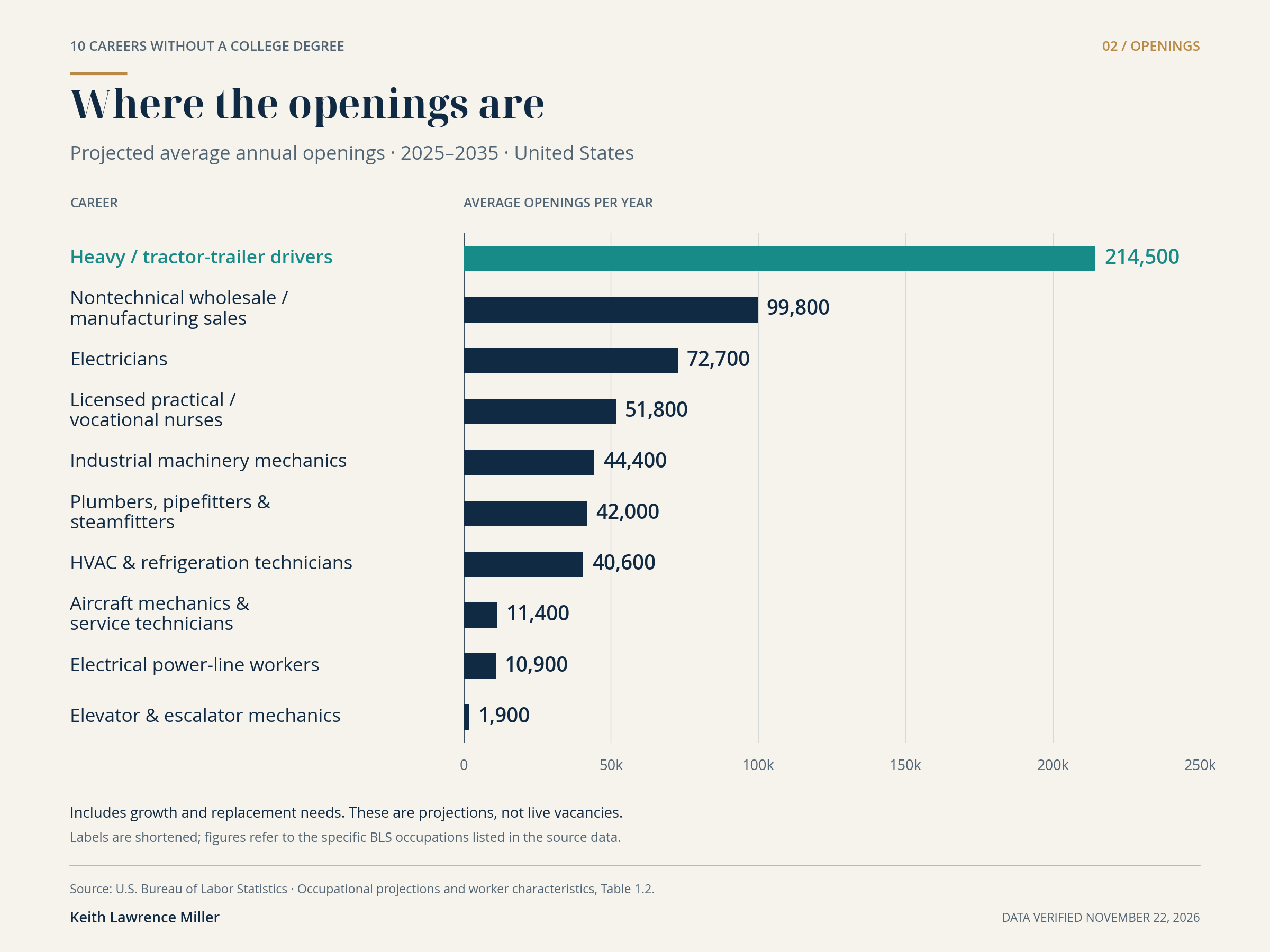
Projected average annual openings for 2025–2035, including growth and replacement needs.
How to choose a career that fits your life
Start with the work itself. Mechanical troubleshooting, direct patient care, commercial driving, and business sales place different demands on a person. Consider the activities you can imagine doing well every day, including the less attractive parts of the job.
Then look at access. National figures can identify possibilities, but your decision depends on reachable employers, available training places, and the requirements of jobs you could realistically pursue. Compare several current local postings before assuming a pathway is open nearby.
Income during training deserves separate attention. Registered apprenticeships combine paid employment with instruction and progressive wage increases. The Department of Labor's Apprenticeship.gov provides information and a job finder for exploring those opportunities. Ask individual sponsors about their terms and any expenses you would still carry. Registered apprenticeship information [14].
Before paying for a program, establish what successful completion would make you eligible to do. Obtain the total cost in writing, including equipment and examination expenses where applicable. Verify that the training meets the relevant requirements and that employers recognize the credential. A completion certificate by itself is insufficient evidence of a credible route into employment.
A useful first check costs no tuition: review local job requirements, contact employers or apprenticeship sponsors, and confirm the relevant program approval. A program deserves further consideration when those sources agree that it prepares applicants for a defined hiring or licensing requirement. If that connection cannot be established, resolve the gap before committing money.
Turn your experience into evidence an employer can use
Once you choose a direction, build your application around the work you can demonstrate. Relevant evidence may include mechanical repairs, customer service results, accurate recordkeeping, safety training, dependable attendance, or responsibility for equipment and schedules.
Describe what you actually did and the result. Someone applying to a maintenance trainee role can explain an equipment problem they diagnosed or a repair they completed. A sales applicant can show how they handled customer needs, followed up on opportunities, or contributed to revenue. A career changer can connect previous responsibilities to the demands of the new occupation without overstating their qualifications.
Choose two careers from this list, investigate the local entry routes, and speak with people who hire or train new workers. That will give you a stronger basis for deciding where to invest your time and how to present yourself for the opportunity.
Sources and research notes
1. BLS occupational projections and worker characteristics
https://www.bls.gov/emp/tables/occupational-projections-and-characteristics.htm
2. BLS electrician profile
https://www.bls.gov/ooh/construction-and-extraction/electricians.htm
3. BLS industrial machinery profile
4. BLS HVAC profile
5. BLS plumbing and pipefitting profile
https://www.bls.gov/ooh/construction-and-extraction/plumbers-pipefitters-and-steamfitters.htm
6. BLS practical and vocational nursing profile
https://www.bls.gov/ooh/healthcare/licensed-practical-and-licensed-vocational-nurses.htm
7. FAA experience requirements
https://www.faa.gov/mechanics/become/experience
8. BLS aircraft maintenance profile
9. BLS electrical power-line profile
https://www.bls.gov/ooh/installation-maintenance-and-repair/line-installers-and-repairers.htm
10. BLS wholesale and manufacturing sales profile
https://www.bls.gov/ooh/sales/wholesale-and-manufacturing-sales-representatives.htm
11. BLS truck-driving profile
12. BLS wage methodology
https://www.bls.gov/oes/2025/may/oes_tec.htm
13. BLS elevator and escalator profile
https://www.bls.gov/ooh/construction-and-extraction/elevator-installers-and-repairers.htm
14. Registered apprenticeship information